Biogas vs Composting: What Happens to Food Waste After It Leaves Your Bin?
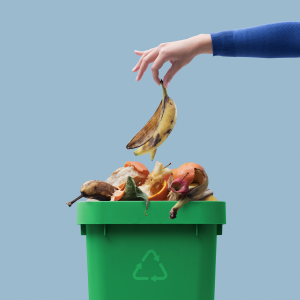
You scrape the leftover food from lunch into a food-waste bin, close the lid and move on with your day.
But where does it go next?
For many of us, putting food scraps into the correct bin feels like the end of the process. In reality, it can be the beginning of an entirely new journey.
When food waste is collected separately from general rubbish, it may be processed through systems that recover some of the energy, nutrients and organic material still contained within it.
Two important methods are composting and anaerobic digestion, the process commonly used to produce biogas.
Although both deal with organic materials, they do not work in the same way and they do not produce the same end products.
In simple terms:
Composting uses oxygen to turn organic waste into compost that can support soil.
Anaerobic digestion breaks organic material down without oxygen, producing biogas as well as a residual material known as digestate.
Rather than thinking of this as biogas vs composting and deciding which one “wins”, it is more useful to understand the different roles they can play within a circular organic-waste system.
For New Zealand households and businesses, that journey starts with something surprisingly simple:
Putting food waste in the right place.
Why Does It Matter What Happens to Food Waste?
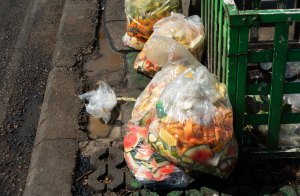
Food waste still contains organic material even after we decide we no longer want it.
Fruit peelings, vegetable trimmings, coffee grounds and other food scraps contain carbon, moisture and nutrients that came from the resources used to grow and produce that food in the first place.
When organic waste is simply mixed into general rubbish, opportunities to recover some of those resources can be lost.
There is also a climate reason to manage food waste more carefully.
New Zealand's Ministry for the Environment reports that food and organic waste contribute around 9% of the country's biogenic methane emissions and 4% of total greenhouse-gas emissions, including emissions associated with food production and decomposition in landfill.
Organic materials such as food, garden waste, wood and paper are major contributors to methane emissions from the waste sector as they decompose.
Preventing edible food from becoming waste should therefore come first.
But some food waste is unavoidable.
Think banana skins, coffee grounds, onion peelings, vegetable trimmings and other scraps that cannot reasonably be eaten.
Once these materials become waste, where they go next matters.
What Are the Main Options for Food Waste?
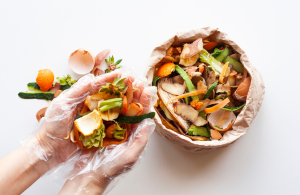
There are several possible pathways depending on the location, collection service and type of food waste.
For separately collected organic material, two of the most important biological treatment processes are:
Composting, where microorganisms break down organic material in the presence of oxygen.
Anaerobic digestion, where microorganisms break down organic material without oxygen and produce biogas and digestate.
They start with similar organic resources but recover value from them in different ways.
Let's look at each process.
What Is Composting?
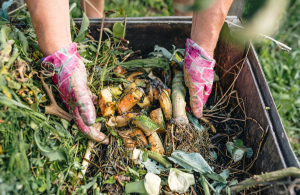
Composting is the controlled biological decomposition of organic materials under oxygen-rich, or aerobic, conditions.
Food scraps may be combined with other organic materials, such as green waste, and carefully managed to create the conditions microorganisms need to break the material down.
Temperature, oxygen, moisture and the balance of materials all influence the composting process.
Over time, recognisable organic waste is transformed into a more stable material: compost.
Finished compost can then be applied to soil.
Its value goes beyond simply supplying nutrients. Compost contributes organic matter and can support soil structure, water retention and biological activity.
This is why composting is closely connected with soil health.
It is also worth remembering that not all composting systems work in the same way. Commercial composting facilities can process materials under more controlled conditions than a typical backyard compost system, which is particularly important when dealing with certain compostable products.
If you're unsure about the distinction, read our guide to Commercial Composting vs Home Composting.
The food may have reached the end of its useful life on our plate, but some of its organic material can enter another cycle.
Food → food scraps → compost → soil
That is very different from simply treating the scraps as rubbish.
What Is Biogas?
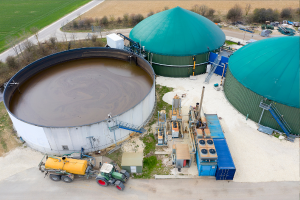
Biogas is produced through a process called anaerobic digestion.
The key difference is in the name: anaerobic digestion takes place without oxygen.
Organic materials such as food waste are placed into an enclosed system, often called a digester or reactor, where microorganisms break them down.
The process produces two main outputs:
- Biogas
- Digestate
Biogas primarily contains methane and carbon dioxide.
Instead of allowing the methane simply to escape as organic material decomposes, an anaerobic digestion system captures the gas so its energy can potentially be used.
Depending on the facility, biogas may be used to produce heat and electricity or be upgraded for other energy applications.
So the journey looks something like:
Food scraps → anaerobic digestion → biogas + digestate
One waste stream has now produced two potentially useful resources.
What Happens to Food Waste During Anaerobic Digestion?
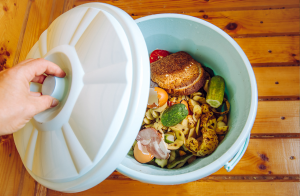
Imagine the process as a very large sealed biological processing system.
Food and other suitable organic material enter the digester.
Microorganisms gradually break that material down without oxygen.
As the material decomposes, gas is produced.
That gas is captured rather than simply released.
The resulting biogas can then become an energy resource, while the material remaining after digestion is known as digestate.
This means anaerobic digestion is doing something particularly interesting:
It can recover both energy and nutrients from organic waste.
What Is Digestate?
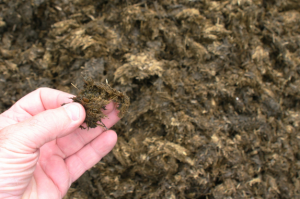
Digestate is the material left behind after anaerobic digestion.
Although much of the readily biodegradable carbon in the incoming material has been converted during the production of biogas, nutrients can remain in the digestate.
Depending on the feedstock, processing method, treatment and regulatory requirements, properly managed digestate may have beneficial agricultural uses.
This is an important distinction because anaerobic digestion does not simply turn food scraps into gas and leave nothing behind.
Instead, the process can potentially recover:
Energy through biogas
and
Nutrients through digestate
That makes food waste much more interesting than the word “waste” suggests.
Biogas vs Composting: What's the Main Difference?
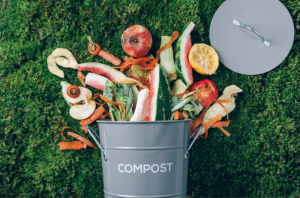
The biggest difference between biogas production and composting is what the process is designed to recover and how the organic material is broken down.
Composting takes place with oxygen and produces a stable organic soil amendment.
Anaerobic digestion takes place without oxygen and produces biogas along with digestate.
This leads to different strengths.
1. Composting Focuses on Organic Matter and Soil
Compost can add stable organic matter to soil.
Organic matter contributes to several important soil functions, including structure, water retention, nutrient cycling and biological activity.
This is one of the reasons composting isn't simply a method of getting rid of food scraps—it can help return useful organic material to the soil.
If you'd like to explore that connection in more detail, read Why Healthy Soil Matters: How Food Waste and Compost Support Soil Health in New Zealand, where we look more closely at how food waste, compost and soil health are connected.
That makes compost valuable where improving or maintaining soil quality is an important goal.
2. Anaerobic Digestion Can Recover Energy
Anaerobic digestion captures some of the energy contained within biodegradable organic material in the form of biogas.
The resulting gas may then be used as an energy source.
At the same time, nutrients can remain within the resulting digestate.
The important conclusion is therefore not:
“Composting is better.”
Or:
“Biogas is better.”
It is:
They recover different types of value from organic waste.
In the right waste-management system, anaerobic digestion and composting can even complement one another rather than compete.
Biogas Is Already Being Produced From Food Waste in New Zealand
Anaerobic digestion isn't just an overseas concept.
It is already being used to process food waste in New Zealand.
A notable example is the Ecogas facility in Reporoa.
Collected food scraps from Auckland are transported there for processing through anaerobic digestion. The facility converts organic material into outputs including biogas, heat, electricity and fertiliser products.
Organic material from food production, wastewater and agricultural activities can also provide suitable feedstocks for biogas production depending on the facility.
For someone scraping leftovers into a food-scraps bin, that creates an interesting perspective.
Yesterday's food waste can potentially become tomorrow's energy and agricultural input.
But that only works effectively when the right material reaches the right processing system.
And that's where waste separation becomes crucial.
The Journey Starts Before Food Waste Leaves Your Building
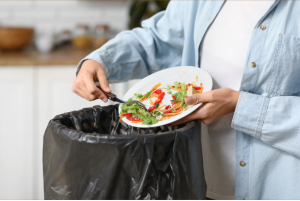
Composting facilities and anaerobic digesters can only work with the material they receive.
That means the quality of an organic-waste stream begins much earlier—inside kitchens, cafés, restaurants, workplaces and other areas where food is discarded.
Consider a food-waste bin filled with:
- Vegetable scraps
- Coffee grounds
- Fruit peelings
- Leftovers
Now imagine the same bin also contains:
- Plastic wrappers
- Disposable gloves
- Bottles
- Conventional plastic bags
The second waste stream is much harder to process.
This is why source separation matters.
Food waste should be separated from inappropriate materials as close as possible to the point where it is generated.
For businesses, that could mean placing dedicated organics bins at food-preparation benches, dish-return stations, cafés, staff kitchens or other areas where food scraps regularly occur.
Why Food-Waste Contamination Matters
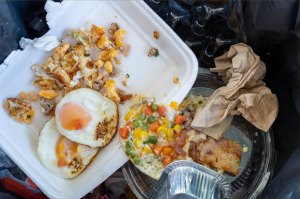
Contamination occurs when items that do not belong in an organic-waste stream are mixed with the food scraps.
Depending on the collection and processing system, problem materials might include:
- Conventional plastic bags
- Plastic packaging
- Glass
- Metals
- Disposable gloves
- Cleaning wipes
- Other general rubbish
Even something that seems environmentally friendly may not necessarily belong.
For example, a product being labelled compostable does not automatically mean every commercial composting or anaerobic digestion facility will accept it.
Different facilities use different equipment, processing times and feedstock requirements.
This means one of the most important rules of food-waste management is:
Check what your local collector and processor actually accepts.
Where Compostable Bin Liners Fit In
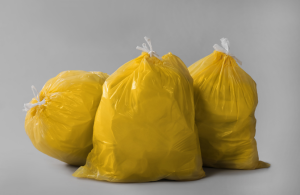
Food waste can be messy.
It tends to be wet, heavy and more likely than dry office rubbish to create odours or residue inside a bin.
This is why liners can play a practical role in food-waste collection.
A correctly sized liner can:
- Make bins easier to empty
- Help contain wet food scraps
- Reduce direct contact between food and the inside of the bin
- Make everyday waste handling cleaner
- Help staff keep organic waste separated from general rubbish
However, using an ordinary plastic rubbish bag for an organic-waste stream can create another problem if that plastic enters a biological processing system that does not accept it.
This is where compostable bin liners can be useful—when the waste collector and processing facility accept them.
Insinc supplies a range of compostable bin liners and rubbish bags, with options suitable for everything from smaller kitchen caddies to larger commercial and wheelie bins.
Explore Compostable Bin Liners
For businesses setting up a dedicated food-waste collection system, choosing the right liner can make everyday separation cleaner and easier.
What About BioBag?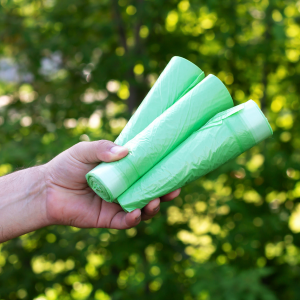
BioBag is another option available through Insinc for businesses looking for compostable waste-collection products.
The BioBag range includes different capacities for applications such as food scraps and organic-waste collection.
These products can be particularly relevant where a business has a dedicated food or organic-waste programme and its collection provider accepts the specific compostable liner being used.
That last part matters.
The value of a compostable liner isn't simply that the word “compostable” appears on the packaging.
Its value comes from being used within an appropriate system.
Explore BioBag Compostable Bags
If your waste programme accepts compostable liners, BioBag products can provide another option for keeping food and organic waste contained and separated.
Can Compostable Liners Go Through Anaerobic Digestion?
This is where businesses need to be particularly careful.
Do not assume that because a liner is compostable, it is automatically suitable for an anaerobic digestion facility.
Composting and anaerobic digestion operate under different conditions—and even within composting, home and commercial composting are not the same process.
Our guide to Commercial Composting vs Home Composting explains why the distinction matters when choosing and disposing of compostable products.
A compostability certification describes how a material performs under specified composting conditions. It does not automatically establish that a particular anaerobic digestion facility wants or can process that product.
Some organic-waste collection programmes may accept certain compostable liners.
Others may require:
- Food scraps to be loose
- Particular approved liners
- Specific certifications
- Compostable packaging to be excluded entirely
The correct approach is simple:
Check with your collector before choosing the liner.
Ask where the food waste will be processed and whether the specific liner or certification is accepted.
This small step can help prevent a well-intentioned purchasing decision from creating contamination farther down the waste stream.
Compostable Doesn't Mean Recyclable
Another common mistake is placing compostable bags into conventional plastic recycling.
Compostable and recyclable are different end-of-life pathways.
A compostable liner is designed to break down under specified biological conditions. It should not be treated as ordinary recyclable plastic unless a specific collection programme explicitly says otherwise.
This is another reason clearly labelled waste stations are so important.
The easier it is for people to understand the difference between food waste, recycling and general rubbish, the cleaner each waste stream can remain.
Composting or Biogas: Which Is Better for Food Waste?
There isn't a universal answer.
The appropriate solution depends on:
- The type of organic material
- Local processing infrastructure
- Collection systems
- Contamination levels
- The desired resource-recovery outcome
Composting can be particularly valuable when the objective is to create a stable organic material that can contribute to soil.
Anaerobic digestion has the additional advantage of recovering energy from biodegradable material while leaving digestate that can potentially return nutrients to productive use.
In some waste-management systems, the two processes can complement each other rather than compete.
What matters most is moving away from the idea that every unwanted material belongs in the same rubbish bin.
Food-Waste Prevention Still Comes First
There is another important point that can easily get lost when discussing clever ways to process food scraps.
The best outcome for edible food is usually that it gets eaten.
Neither anaerobic digestion nor composting should become an excuse for unnecessary food waste.
Businesses should first look for opportunities to avoid surplus food through:
- Better purchasing
- Improved storage
- Stock rotation
- Portion planning
- Better forecasting
- Redistributing suitable surplus food where possible
Processing becomes important for the organic material that cannot reasonably be prevented or consumed.
A sensible hierarchy is:
Prevent edible food waste first.
Recover or redistribute suitable surplus where possible.
Separate unavoidable organic waste.
Direct it to an appropriate recovery pathway.
Use disposal as the last option.
How New Zealand Businesses Can Improve Food-Waste Separation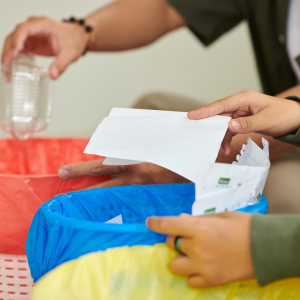
A good commercial food-waste programme does not have to be complicated.
The biggest improvements often come from making the correct action easy for employees.
1. Identify Where Food Waste Is Generated
A restaurant may need organics bins beside food-preparation and dish-return areas.
An office might only need a clearly labelled kitchen caddy.
A food-production facility may require larger commercial collection points positioned throughout the workflow.
2. Put Bins Where People Need Them
Employees are more likely to separate food waste correctly when the right bin is close to where the waste is produced.
3. Use Clear Labels
Show people what can and cannot go into each waste stream.
Simple examples can be more effective than complicated instructions.
4. Choose the Right Liner
If your collection provider accepts compostable liners, choose one that suits:
- The size of your bin
- Waste volume
- Food-waste weight
- Moisture levels
- Collection frequency
5. Confirm Collection Requirements
Before purchasing bags specifically for an organics programme, ask your waste provider what it accepts and where the material will ultimately be processed.
A practical setup looks like this:
Correct bin → correct liner → correct material → correct collection → correct processing facility
If one part of that chain does not match the others, contamination or unnecessary waste can result.
Choosing Compostable Liners for Commercial Food Waste
If your collector accepts compostable liners, choosing the right product comes down to more than simply finding something labelled “eco-friendly”.
Consider:
1. Bin Size
A liner should fit the container securely without using significantly more material than necessary.
2. Food-Waste Volume
A small staff kitchen will have very different requirements from a restaurant or food-production facility.
3. Weight
Food scraps can become surprisingly heavy, particularly when they contain liquids.
4. Moisture
Wet organic waste requires a liner suited to the application.
5. Collection Frequency
If bags are changed several times each day, ease of use can become a significant consideration for staff.
Insinc supplies compostable liners across a range of sizes for applications from small food-waste caddies through to larger commercial waste systems.
The best liner is therefore not necessarily the biggest or strongest option.
It is the one that fits the bin, suits the waste and is compatible with the collection system.
One Food Scrap, Two Very Different Futures
Think again about that vegetable peeling dropped into the bin.
Its story could end in general rubbish.
Or, if suitable collection infrastructure exists, it could follow another route.
Through composting:
Food scrap → composting → compost → soil
Through anaerobic digestion:
Food scrap → anaerobic digestion → biogas + digestate → energy and nutrient recovery
The processes are different, but the underlying idea is similar.
Organic waste can contain resources worth recovering.
That is why the conversation about biogas vs composting should not simply be about deciding which technology is superior.
A more useful question is:
How can we make the best use of the organic material we have already produced?
The answer starts with preventing unnecessary food waste.
Then, for the unavoidable scraps that remain, it means keeping the waste stream clean, separating it correctly and matching it with an appropriate processing pathway.
Sometimes the most important part of a sophisticated resource-recovery system happens long before the compost pile or anaerobic digester.
It happens at the bin.
Why Choose Insinc for Compostable Bags and Food-Waste Liners?
Good organic-waste management starts with good separation.
Insinc supplies New Zealand homes and businesses with compostable bin liners, BioBag products, food-waste bags, rubbish bags and commercial waste-management supplies in a variety of sizes and formats.
Whether you're managing a small staff kitchen, café, restaurant, hospitality venue, commercial kitchen or larger workplace, the right liner can help make food-waste collection cleaner and easier to manage.
The key is choosing a product that fits both your bin and your waste-management pathway.
Before introducing compostable bags into a commercial organics system, confirm that your collector or processor accepts the particular liner you plan to use.
Make Food-Waste Separation Easier
Find compostable liners for kitchen caddies, workplace food-waste bins and larger commercial waste systems.
Or explore BioBag options for different organic-waste collection applications.
Frequently Asked Questions About Biogas, Composting and Food Waste
What is the difference between biogas and composting?
Composting and anaerobic digestion both process organic material, but they work differently. Composting uses oxygen and produces compost, while anaerobic digestion takes place without oxygen and produces biogas and digestate.
Is anaerobic digestion the same as composting?
No. Both are biological methods of processing organic waste, but anaerobic digestion operates without oxygen while composting is an aerobic process. They also produce different outputs.
What is biogas made from?
Biogas can be produced from biodegradable organic materials such as food waste, agricultural residues, manure and wastewater-related organic materials. The materials accepted depend on the individual facility.
What happens to food waste during anaerobic digestion?
Food waste is placed into a sealed system where microorganisms break down the organic material without oxygen. The process produces biogas, which can be captured for energy use, as well as digestate.
What is digestate?
Digestate is the material remaining after anaerobic digestion. It can contain nutrients from the original organic feedstock and, depending on its treatment, quality and local requirements, may have beneficial agricultural applications.
Is biogas used in New Zealand?
Yes. Anaerobic digestion is already used in New Zealand to process organic materials and produce biogas. Food scraps collected in Auckland, for example, are processed at the Ecogas facility in Reporoa.
Is composting or anaerobic digestion better?
Neither process is universally better. They recover different types of value from organic materials. Anaerobic digestion can recover energy as biogas, while composting produces a stable organic material that can contribute organic matter to soil.
What is the difference between commercial and home composting?
Home composting generally operates at smaller scale and under less controlled conditions, while commercial composting facilities can maintain controlled temperatures, moisture and processing conditions for larger volumes of organic material. Read our full guide to Commercial Composting vs Home Composting for more information.
How does compost help soil?
Compost can add organic matter to soil and contribute to soil structure, nutrient cycling, biological activity and water retention. Learn more in Why Healthy Soil Matters: How Food Waste and Compost Support Soil Health in New Zealand.
Can compostable bin liners be used for food waste?
Yes, compostable liners can be useful for collecting food waste when the waste collector or processing facility accepts them. Always confirm acceptance before introducing compostable liners into an organics programme.
Can compostable bags go into an anaerobic digester?
Not automatically. A bag being compostable does not necessarily mean a particular anaerobic digestion facility accepts it. Check the requirements of your food-waste collector and processing facility.
Can compostable bags go in the recycling bin?
They should not normally be placed into conventional plastic recycling. Compostable materials are designed for a different end-of-life pathway, so always follow the disposal guidance for the product and your local collection service.
Where can I buy compostable food-waste liners in New Zealand?
Insinc supplies compostable bin liners and BioBag products for a range of food and organic-waste collection applications in New Zealand, including options for small kitchen caddies and larger commercial bins.
https://www.insinc.co.nz/biodegradable-cornstarch-rubbish-bags.html
Posted: Friday 14 August 2026