MEET ALEX & ALEX · THE PRACTICALISTS
Your iced latte looks great. Your smoothie recipe is sorted. Now, which cup should you serve them in?
Choosing paper or plastic cold cups for a café means balancing presentation, portion size, lid compatibility and the journey from counter to customer. The right choice may be different for each drink on your menu.
Alex & Alex walk through the practical checks that help New Zealand cafés choose a cup system that works during a busy shift.
Paper or plastic cold cups: the quick answer
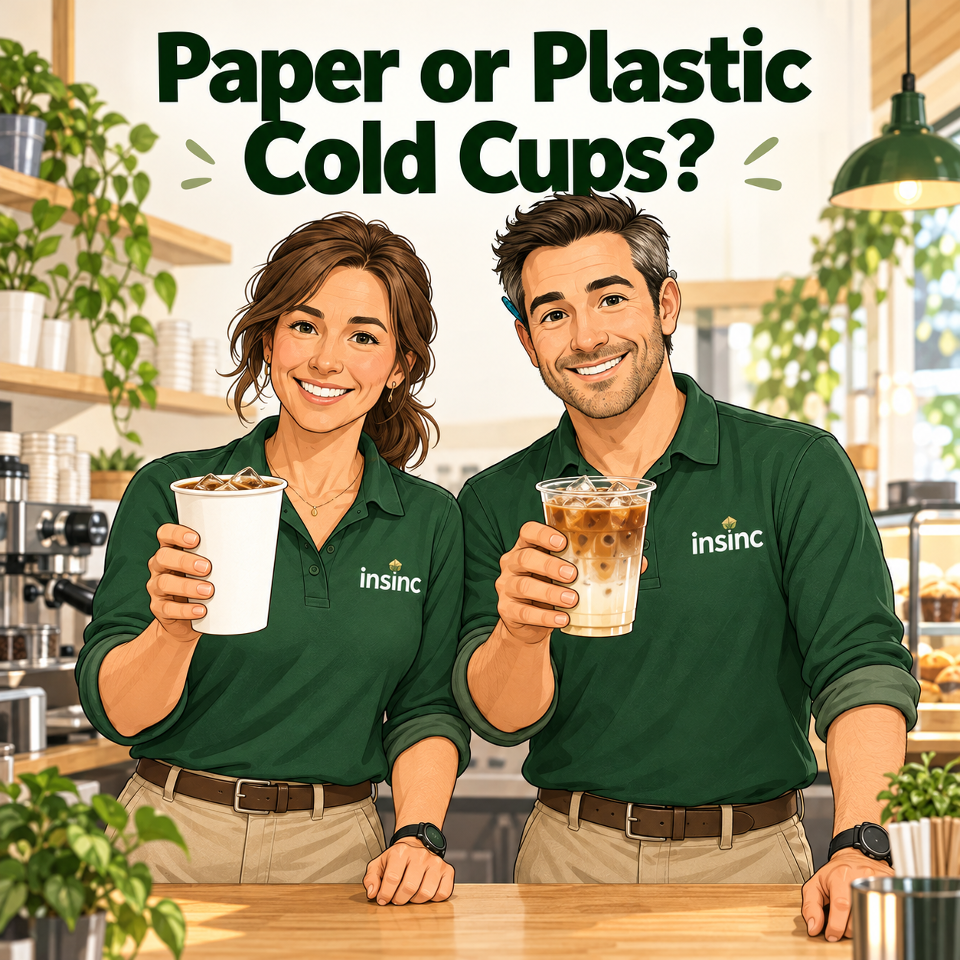
Choose a clear cold cup when seeing the drink matters. Consider a paper cold cup when an opaque, printable surface suits your service. In both cases, confirm cold-drink suitability, usable capacity, matching lids and the available disposal route.
There is no universal winner. A layered iced coffee, a juice and a thick smoothie can place different demands on the cup and lid. Start with your actual recipes rather than choosing by material alone.
The Practicalist Take
Choose the cup and lid together. A cup that looks right but slows down service or needs a replacement lid is not a good fit for your café.
1. Match the cold cup to your drinks menu
List your main takeaway drinks, including the ice, foam and toppings that go into each one. Then trial the complete recipe in the proposed cup.
- Iced coffee: allow room for your usual ice quantity, milk and coffee without filling into the lid space.
- Smoothies and slushies: check the opening and drinking method against the drink’s thickness.
- Juice and iced tea: check the serving size, lid fit and how comfortably customers can carry the drink.
- Topped drinks: allow headspace or choose a compatible dome lid where appropriate.
Compare the supplier’s stated millilitre capacity as well as the ounce label. Confirm whether the stated capacity is measured to the brim or represents a recommended fill. Ice and toppings take up space too.

2. Decide how much presentation matters
Clear plastic cold cups
Clear cups show off colour, layers and texture. That makes them worth considering when the appearance of an iced latte or fruit smoothie is part of its appeal.
Check the material specification: PET, recycled PET and PLA are not interchangeable descriptions. Similar-looking cups can have different temperature limits and disposal requirements.
Shop this look: compare the Emperor 12oz / 360ml clear PET cup and 16oz / 520ml clear PET cup for your serving sizes.
Paper cold cups
Paper cups offer an opaque surface for a simple look, printed design or order label. Choose a product specifically suitable for cold drinks; do not assume any paper coffee cup will perform the same way.
Ask about the lining or barrier coating. A paper exterior does not, by itself, establish that the complete cup is plastic-free, recyclable or compostable.
Try a paper option: Vegware 16oz / 450ml paper cold cups, pack of 50, have a colourful printed design and use Vegware 96-Series cold lids.

A practical comparison for café buyers
| Consideration | Paper cold cups | Clear plastic cold cups |
|---|---|---|
| Drink visibility | Conceals the drink’s sides | Shows colour and layers |
| Presentation | Space for print or labels | Drink itself provides visual appeal |
| Performance | Check coating, seams and cold-use suitability | Check material, rigidity and temperature limits |
| Lids | Use the specified cup-and-lid pairing | Use the specified cup-and-lid pairing |
| Disposal | Check the whole cup, including its lining | Check the resin and collection provider’s acceptance |
3. Check lid fit before ordering cartons
Two cups labelled “12oz” do not necessarily take the same lid. Match the supplier’s cup and lid codes, rim dimensions and compatibility information.
- Flat lids: check clearance above the drink and the type of opening.
- Dome lids: check space for toppings and the intended drinking accessory.
- Sip lids: test whether the opening works comfortably with the recipe.
For a specific example, Insinc’s BioPak PET lid for paper cold cups is listed for specified 90mm BioPak paper cold cups. It is not a universal lid for every paper cup.
Test the recommended combination with your drink. Check that the lid seats evenly around the rim and stays secure during normal handling. An opening for sipping or a straw means the lid is not a fully sealed closure.
4. Test condensation and holding time
A cold cup can collect condensation when its outside surface is cooler than the surrounding air’s dew point. Check how each sample handles a real iced drink over your usual waiting and takeaway period.
Look for a comfortable grip, labels that stay readable, paper seams that remain sound and a base that sits securely in the carrier. Do not assume paper guarantees a dry exterior or that every clear cup has the same strength.
Follow the manufacturer’s temperature limits. Do not pour hot espresso directly into a cold-only cup unless that use is expressly permitted; adapt preparation to the cup’s specification.
5. Trial the whole takeaway routine
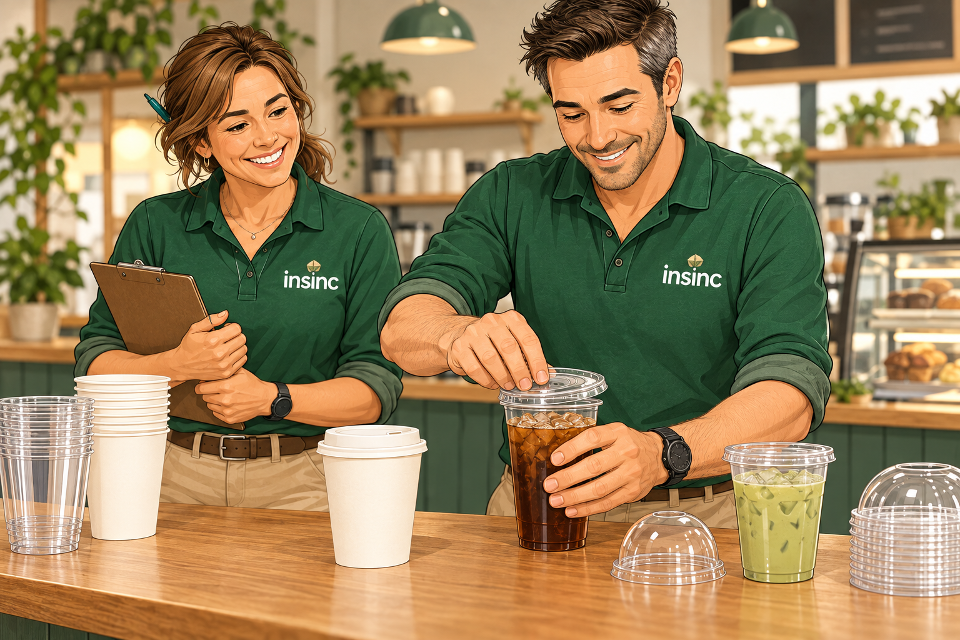
A useful sample test starts with taking a cup from the stack and ends with handing over the order.
- Make the drink using your normal recipe and ice quantity.
- Fit the recommended lid and check its seating.
- Place the cup in your usual carrier.
- Hold it for a realistic collection or delivery interval.
- Record grip, stability, leaks and any staff difficulties.
Include both small and large drinks. A carrier that supports one cup shape may not support another equally well.
Keep matching cups and lids together and label storage positions clearly. Where the supplier confirms compatibility, a shared lid across several sizes may simplify stock management.

Recycling and composting: check the actual route
Material claims and collection acceptance are separate questions. Before choosing a cup for an environmental benefit, establish what happens to that exact cup and lid after use.
- Paper cups: check the lining and the complete product’s specifications. Do not assume they belong in ordinary paper recycling.
- Plastic cups: identify the material and confirm acceptance with the relevant collection provider. A resin identification number alone is not a disposal instruction.
- Compostable cups: check certification, whether it covers home or commercial composting, and whether an available processor accepts the specific product.
The Ministry for the Environment advises that compostable plastics do not belong in kerbside or soft-plastic recycling. It also recommends buying commercially compostable plastics only where a suitable commercial collection service is available.
Check the lid separately: a paper cup and a clear lid may need different disposal routes. Only display bin instructions that match your collection arrangement. For dine-in service, consider reusable glasses where your washing and service setup supports them.
Compare the cost of a complete drink order
Packaging cost per order = cup + lid + accessories + allocated carrier cost + avoidable wastage.
Compare equivalent serving sizes on the same GST basis. Include replacement lids, damaged cups and remakes observed during your trial, rather than judging only the carton price.
Also consider shelf space and how quickly each size sells. Adding a new cup for every recipe can leave slow-moving stock and make the counter harder to organise.
Shop cold cups and matching lids at Insinc
Use these options as a starting point for your café’s next cup trial. Choose your serving size first, then select a lid from the matching product range.
Vegware 16oz / 450ml Paper Cold Cups
Colourful paper cold cups supplied in a pack of 50. PLA-lined on both sides, with a stated 450ml brim capacity. A practical option to trial for an opaque cold-drink presentation.
View paper cold cups →Vegware 96mm Dome Lids — Pack 50
Explore the 96-Series dome lid with a straw hole for the Vegware paper cup above. Check your topping clearance and drinking accessory before ordering.
View Vegware dome lids →Emperor 12oz / 360ml Clear PET Cups
Clear cold-serve cups that display your drink’s colour and layers. Consider this size for a smaller smoothie, juice or iced drink. Supplied in cartons of 1,000.
View 12oz clear cups →Emperor 16oz / 520ml Clear PET Cups
A larger clear-cup option for your cold-drinks menu. Trial it with the complete recipe, including ice and headspace. Supplied in cartons of 1,000.
View 16oz clear cups →Emperor Flat Lids for 12oz / 16oz Cups
The listed flat-lid option for the Emperor cups featured here. Choose this format when you do not need a dome for extra topping clearance. Carton of 1,000 lids.
View Emperor flat lids →Emperor Dome Lids for 12oz / 16oz Cups
Compare this dome format for drinks needing extra space above the rim. These lids are listed for the Emperor 12oz and 16oz cold-serve cups. Carton of 1,000 lids.
View Emperor dome lids →Pair by product range: the Vegware paper cup uses Vegware 96-Series cold lids. The Emperor cups use their listed Emperor lids. Do not swap lids between ranges based on ounce size alone.
For PLA-lined cups and PLA lids, confirm an accepted composting route before making disposal claims. Check collection requirements separately for PET products.
Want more sizes? Browse all cold cups or plastic cold cups and lids. Product pages show current prices and availability.
Your 60-second Practical Workplace Check-up
- Does the complete recipe fit with enough headspace?
- Does seeing the drink matter to its presentation?
- Have we confirmed the matching lid?
- Does the cup work in our carrier after the usual waiting time?
- Do our disposal instructions match an available collection service?
Start with your best-selling cold drink. Trial the cup, lid and carrier together before changing the rest of your menu.
Frequently asked questions
Are paper cups suitable for iced coffee?
Yes, when the specific cup is rated for cold drinks and performs well with your recipe and holding time. Confirm the lining, usable volume and matching lid.
Which cups are best for smoothies?
Choose around thickness, portion size and toppings. Clear cups display the drink, while suitable paper cold cups provide an opaque option. Test the lid opening and drinking method too.
Will any lid fit a cup of the same ounce size?
No. Ounce size describes capacity, not rim design. Use the supplier’s confirmed pairing rather than assuming equal capacity means equal lid fit.
Are paper cold cups automatically more sustainable?
No single material label settles that question. Consider the whole product, its performance, unnecessary waste and the disposal system actually available.
Can compostable plastic cups go in recycling?
No. Keep compostable plastics out of kerbside and soft-plastic recycling. Confirm an accepted composting route with the collection provider.
Further guidance: Ministry for the Environment: biodegradable and compostable plastics. Product specifications and the collection provider’s instructions should guide your final choice.