
Waste Bins vs Waste Stands: Which Is Right for Your NZ Business?

When setting up a waste management system for a workplace, warehouse, commercial kitchen or production facility, choosing a rubbish bag is only part of the decision.
You also need somewhere to put it.
For many businesses, that means choosing between a traditional waste bin and a waste stand.
At first glance, the difference may seem fairly minor. Both hold waste bags, both can be used for general rubbish or separated waste streams, and commercial models can offer large capacities.
However, their design and the way staff interact with them can be quite different.
A traditional waste bin generally uses a more enclosed, rigid body around the waste bag. A waste stand, on the other hand, typically uses an open frame that supports the bag or continuous liner system without completely surrounding it.
Insinc's Longopac range demonstrates this difference clearly. Its Maxi Waste Stand uses a floor-standing frame with a base and head to support the Longopac cassette, while its Dynamic Waste Bins use a more substantial galvanised steel structure. Some waste bin models also include pedal-operated lids for hands-free disposal.
Neither design is automatically better.
The right choice depends on what you are throwing away, how quickly waste is generated, where the system will be positioned, hygiene requirements, cleaning procedures and how employees need to use it.
This guide explains the difference between waste bins and waste stands and helps New Zealand businesses decide which setup is likely to work best.
What Is a Waste Bin?
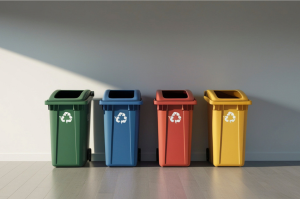
A waste bin is the conventional container most people picture when they think about rubbish disposal.
Commercial waste bins usually have a rigid body made from materials such as plastic, stainless steel or galvanised steel. A rubbish bag or liner sits inside the container and is removed when full.
Depending on the model, commercial bins may include:
- Open tops
- Fixed or removable lids
- Foot-pedal lids
- Wheels
- Lockable castors
- Colour-coded components
- Different capacities for different waste volumes
Within Insinc's commercial range, for example, Longopac Dynamic Waste Bins are available in several capacities and configurations. The 125-litre galvanised model includes wheels, locking front brakes and a foot-pedal-operated lid designed for hands-free disposal.
Where Are Waste Bins Commonly Used?
Traditional commercial waste bins can be suitable for environments such as:
- Commercial kitchens
- Food manufacturing facilities
- Warehouses
- Factories
- Offices
- Schools
- Healthcare and aged-care environments
- Hospitality venues
- Retail businesses
- Cleaning and maintenance areas
The enclosed or semi-enclosed construction makes waste bins particularly useful where businesses want the waste bag protected within a rigid structure.
What Is a Waste Stand?
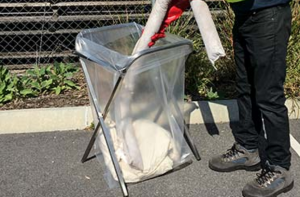
A waste stand, sometimes called a rubbish bag stand, sack holder or waste bag holder, takes a different approach.
Instead of placing the liner inside a large enclosed container, the stand provides a frame that holds the waste bag or liner in position.
The Longopac Maxi Waste Stand stocked by Insinc, for example, has a polypropylene base and head supported by aluminium legs, with wheels that allow it to be moved around a commercial or industrial workspace. The Maxi model has a 190-litre capacity and is designed to work with Longopac continuous waste bag cassettes.
A smaller Longopac Mini Waste Stand is also available for lower-to-medium waste volumes and compact work areas. Its adjustable tilting head helps make loading and liner changes easier.
Waste Stands Are Not Just for General Rubbish
It is easy to assume that an open-frame stand is only useful for dry general waste, but commercial waste stands can also be designed specifically for food-handling environments.
For example, Insinc's Longopac Maxi Stainless Steel Food Waste Stand uses stainless steel legs and wheels designed to resist corrosion and make cleaning easier in food manufacturing, processing and catering environments.
This is why the term waste stand describes the physical design of the waste holder—not necessarily the type of waste it can handle.
Waste Bin vs Waste Stand: What's the Difference?
The easiest way to understand the difference is to compare how each system is constructed and used.
|
Feature |
Waste Bin |
Waste Stand |
|
Design |
Rigid or semi-enclosed container |
Open-frame bag support |
|
Waste bag |
Normally sits inside the bin |
Suspended or supported by the stand |
|
Lid options |
Common, including pedal lids |
Depends on the stand design |
|
Access |
Waste passes into the container opening |
Waste goes directly into supported liner |
|
Cleaning |
Interior and exterior bin surfaces require cleaning |
Generally fewer surrounding surfaces |
|
Mobility |
Mobile models available |
Mobile stands available |
|
Capacity |
Small to high capacity |
Small to high capacity |
|
Best suited to |
Situations where enclosure, durability or lid access is useful |
Fast-moving workflows and efficient bag-based waste handling |
|
Waste streams |
General waste, recycling, organics and specialist applications |
General waste, recycling, organics and specialist applications depending on system |
The difference therefore isn't simply “bin for rubbish, stand for recycling.”
Both systems can potentially handle several waste streams. The more important distinction is how the bag is supported and how workers interact with the waste collection point.
If you're looking to take a broader view of how workplaces can improve their overall waste strategy, you may also find our article Waste Not: The Ultimate Guide to Workplace Recycling Bins helpful. It explores how different recycling bin systems work in practice and how businesses can build more efficient, compliant and easy-to-use recycling setups across the workplace.
1. Consider How Quickly Your Business Generates Waste

Waste volume should be one of the first considerations.
An office kitchen generating a few rubbish bags each week has very different requirements from a food processing facility or warehouse producing waste continuously throughout a shift.
High-volume environments may benefit from waste systems designed around quick bag changes and large capacities.
For example, Insinc's Longopac Maxi Waste Stand has a 190-litre capacity, while the Maxi Dynamic Waste Bin provides 180 litres of capacity. Both are designed for demanding commercial applications, demonstrating that businesses do not necessarily have to choose a traditional bin simply because they generate large quantities of waste.
Instead, consider:
- How quickly each waste station fills
- How many times bags are changed per day
- How far staff move waste
- Whether the station needs to move with the workflow
- What type of material goes into the bag
- Whether employees regularly struggle with conventional bins
A high-capacity system that fits the workflow can reduce unnecessary interruptions.
2. Think About How Bags Are Changed
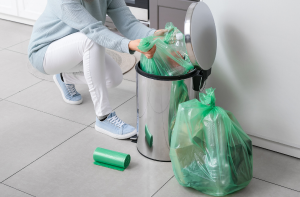
Bag replacement is easy to overlook when choosing commercial waste equipment.
But in busy facilities, workers may change bags dozens of times across multiple stations.
Traditional bins normally require staff to open or remove the top, pull the full liner from inside the container, fit another liner and position it correctly around the rim.
Waste stands can simplify this process because the bag is supported directly by the frame rather than sitting deep inside an enclosed container.
Systems such as Longopac take this idea further by using continuous liner cassettes. The stands and bins in Insinc's Longopac range are designed to pair with these cassettes rather than conventional individual liners.
For workplaces where bag-changing time has a noticeable impact on operations, this can be an important factor when comparing systems.
3. Consider Hygiene and Hands-Free Disposal
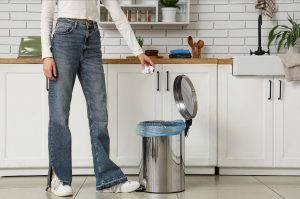
Waste handling and hygiene often go together, particularly in:
- Food preparation
- Food manufacturing
- Commercial kitchens
- Healthcare
- Aged care
- Cleaning operations
- High-traffic workplaces
If staff frequently need to touch a bin lid with their hands, a foot-operated waste bin may be preferable.
Insinc's Longopac Midi Dynamic Pedal Waste Bin, for example, uses a foot-pedal-operated lid specifically to allow hands-free waste disposal.
That does not mean waste stands cannot be used in hygiene-sensitive environments.
The Longopac stainless steel food waste stand is specifically designed for food manufacturing, food processing and catering applications, with stainless components intended to make cleaning and corrosion resistance suitable for demanding environments.
The question is therefore not simply:
“Which one is more hygienic?”
A better question is:
“Which design best supports the hygiene procedures in this particular workplace?”
If preventing hand contact with the waste station is important, a pedal-operated bin may have an advantage.
If frequent cleaning, fast waste disposal and easy liner handling are the bigger priorities, a suitable waste stand may be worth considering.
4. Think About Cleaning the Waste System Itself
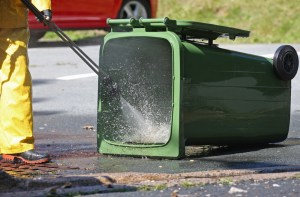
Bins need cleaning too.
When a liner leaks, tears or becomes overfilled, liquids and waste can contaminate the inside of the bin.
A traditional enclosed bin therefore has internal surfaces that need to be included in the workplace's cleaning routine.
A waste stand has less surrounding material because it uses a frame rather than a large enclosed body. Depending on the waste type and system, this can simplify access to components during cleaning.
However, material choice still matters.
For environments exposed to moisture or frequent washing, stainless steel or corrosion-resistant components may be appropriate. Insinc's food waste stand, for example, uses stainless steel legs and wheels specifically for food-industry environments.
Businesses should evaluate the entire cleaning process, including:
- How often equipment will be cleaned
- Whether it will be washed down
- Whether corrosive materials are present
- How easily different surfaces can be reached
- Whether liquids are likely to leak
- Whether the system will be used for food waste
5. Consider Odour and Waste Containment

Some waste is simply smellier than others.
Food scraps, wet waste and certain commercial waste streams may benefit from a lid or more enclosed setup, particularly if waste remains in the collection area for extended periods.
This is one area where a lidded waste bin may be preferable.
However, businesses should not rely on the bin itself to solve an odour problem.
If waste regularly develops strong smells, also review:
- How frequently it is removed
- Whether the correct liner is being used
- Whether bags are leaking
- Whether food waste should be separated
- Whether the waste station is being cleaned properly
- Whether the collection schedule matches waste volumes
Sometimes the problem is not the type of bin. It is the overall waste process.
6. Look at the Space Available
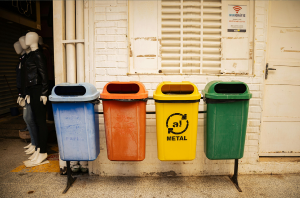
Physical space can also influence the choice between a waste bin and waste stand.
Large rigid bins may work perfectly in spacious waste rooms or production areas but can become inconvenient in tight work zones.
Compact stands can provide an alternative where floor space or manoeuvrability matters.
For example, Insinc's Longopac Mini Waste Stand measures 350 × 850 mm and is designed for smaller spaces and low-to-medium waste volumes.
Before purchasing, measure:
- Available floor space
- Door widths
- Access routes
- Clearance around workstations
- Distance between the waste point and collection area
- Space required to remove full bags
Do not choose capacity without considering the physical environment around the bin.
7. Mobility Can Matter More Than You Think
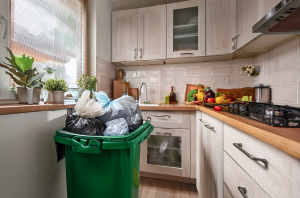
Waste does not always stay in one place.
Warehouses, production lines, food processing facilities and cleaning teams may need waste collection points that move throughout the workplace.
Both commercial waste bins and waste stands can offer mobility.
Insinc's Longopac Maxi Waste Stand includes wheels, while its Dynamic Waste Bin range also includes wheeled configurations with locking front brakes to keep the unit secure once positioned.
If mobility matters, consider:
- Wheel quality
- Floor surfaces
- Whether brakes are required
- Equipment weight
- How often the station moves
- Whether workers need to push it through narrow areas
A mobile waste station can be particularly useful when waste is generated as part of a moving workflow rather than at one fixed disposal point.
8. Waste Segregation Should Influence Your Setup
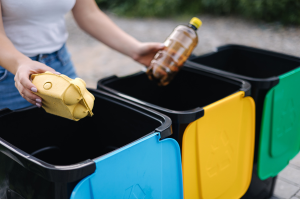
Commercial waste management increasingly involves more than one rubbish stream.
A workplace may need separate collection points for:
- General rubbish
- Mixed recycling
- Food scraps
- Paper
- Glass
- Plastics and cans
- Soft plastics
New Zealand's waste sector has established standardised colours for mobile rubbish, recycling and organic bins as well as internal office bins. WasteMINZ encourages organisations implementing recycling schemes to use consistent colours on bins and signage to reduce confusion.
This means a business may benefit from having several waste bins or stands positioned together as a waste station.
Insinc's Easi Recycling range includes systems for several waste streams, including dedicated recycling bins as well as colour-coded Longopac waste bags for general waste, mixed recycling, food scraps, paper/glass and soft plastics.
Clear Signage Matters Too
Colour alone should not have to do all the work.
Use clear signage showing what belongs in each waste stream.
This is particularly important in workplaces where visitors, contractors or employees move between different sites and may not already understand your waste system.
Waste Stands May Be Better When...
A waste stand may be worth considering when:
- Waste is generated quickly
- Bags need to be changed frequently
- Staff need easy access to the waste opening
- Mobility is important
- You want an open-frame waste collection system
- You use a continuous liner system such as Longopac
- The equipment needs to move between production areas
- You want different stand sizes for different waste volumes
- Easy access during cleaning is important
Large commercial stands can also provide substantial capacity. Insinc's Maxi Waste Stand, for example, provides 190 litres, while the Mini version offers a more compact solution for lower waste volumes.
Waste Bins May Be Better When...
A traditional waste bin may make more sense when:
- You want a more enclosed waste container
- A rigid structure around the liner is preferable
- You need a lid
- Hands-free disposal is important
- A pedal-operated system fits your hygiene procedures
- The unit will be used in demanding industrial conditions
- You want a robust mobile container
- Waste containment is a priority
Commercial models can still be highly mobile. Insinc's Dynamic Longopac bins use wheeled galvanised steel designs, with some configurations offering pedal lids and locking brakes.
Can You Use Both Waste Bins and Waste Stands?
Absolutely.
For many businesses, the most effective solution may be a combination rather than choosing one design for the entire site.
For example:
Office areas:
Traditional recycling and general-waste bins may provide a neat, recognisable waste station.
Warehouse or production areas:
Mobile waste stands may provide easier access where waste is generated quickly.
Food preparation areas:
A pedal-operated bin may suit stations where hands-free disposal is important.
Food processing areas:
A stainless steel waste stand may work well where equipment needs regular cleaning and high-volume waste handling.
Back-of-house areas:
Larger bins or stands can consolidate waste before collection.
Matching the system to each area is often more practical than buying one identical bin for the entire organisation.
For a broader look at how businesses can streamline their waste systems and reduce operational inefficiencies, you may also find our article Improving Efficiency in Commercial Waste Management in New Zealand useful.
Don't Forget the Waste Bag
Whether you choose a waste stand or traditional waste bin, the liner remains an important part of the system.
The wrong rubbish bag can result in:
- Tears
- Leaks
- Bags slipping into the container
- Excess material
- Difficult removal
- Unnecessary double-bagging
Choose a bag based on the dimensions of the waste system, expected weight and type of rubbish, rather than simply choosing the thickest bag available.
Insinc offers rubbish bags and bin liners for different commercial applications, including office liners, heavy-duty refuse bags, wheelie bin liners and compostable options.
Relagted Article: How to Choose the Right Size Rubbish Bag for Your Bin, What's the Difference Between a Bin Bag and a Bin Liner?
Waste Bin or Waste Stand? A Simple Decision Guide
Still unsure?
Ask these questions:
Do you need a lid?
If yes, particularly a pedal-operated lid, look at a suitable waste bin.
Do employees change bags very frequently?
A waste stand or continuous-liner system may make waste handling more efficient.
Is the waste station going to move?
Both options can work, but look specifically for commercial models with suitable wheels and brakes.
Are you handling food waste?
Either may be suitable depending on your hygiene process. Consider stainless steel construction, cleaning requirements and whether hands-free operation is needed.
Is space limited?
Look at the dimensions rather than capacity alone. A compact waste stand or wall-mounted system may be suitable.
Do you have several waste streams?
Choose a system that allows clear segregation using colours, bags and signage.
Is the waste wet, heavy or unpleasant?
Consider containment, liner strength, cleaning requirements and whether a lid would improve the setup.
Choosing a Better Commercial Waste System
The best commercial waste system is not necessarily the biggest bin, the most expensive container or the strongest rubbish bag.
It is the system that makes disposing of waste simple, hygienic and practical for the people using it every day.
For some workplaces, that will be a familiar enclosed waste bin.
For others, an open-frame waste stand combined with a continuous liner system may make far more sense.
And for larger businesses, the answer may be both.
Before choosing, think about:
- Waste volume
- Waste type
- Bag-change frequency
- Hygiene
- Mobility
- Available space
- Cleaning procedures
- Waste segregation
- Staff workflow
Making the right choice at the beginning can help create a waste setup that is easier for employees to use and easier for facilities and cleaning teams to manage.
Why Choose Insinc for Waste Bins, Waste Stands and Recycling Systems?
Insinc supplies commercial waste and recycling solutions for businesses throughout New Zealand, including waste bins, recycling bins, waste stands, Longopac continuous bag systems and commercial rubbish bags and liners. Its Easi Recycling range includes waste systems for different capacities and waste streams, from compact Mini Waste Stands through to high-capacity commercial bins and stands.
Businesses can also source cleaning, hygiene, food packaging and other commercial consumables through Insinc, helping simplify workplace supply purchasing.
Whether you're setting up a new waste station or replacing an inefficient existing system, choosing the right combination of bin, stand, liner and waste-stream identification can make everyday waste management easier.
Ready to Find the Right Waste System for Your Business?
Explore Insinc's range of commercial waste bins, recycling bins, Longopac waste stands and waste bag systems for workplaces, warehouses, hospitality businesses, food production facilities and commercial sites throughout New Zealand.
Need help deciding between a waste bin and waste stand? Contact the Insinc team for help choosing a system suited to your waste volume, workplace and waste streams.
Frequently Asked Questions
What is the difference between a waste bin and a waste stand?
A waste bin generally has a rigid container structure surrounding the rubbish bag, while a waste stand uses an open frame to support the bag or liner. Commercial versions of both can be mobile and available in high-capacity configurations.
Are waste stands suitable for commercial use?
Yes. Commercial waste stands are designed for applications including warehouses, production facilities and other high-traffic workplaces. Specialist stainless steel models are also available for food manufacturing, food processing and catering environments.
Are waste stands only for dry rubbish?
No. The appropriate application depends on the design and materials of the stand. Insinc, for example, carries a stainless steel Longopac waste stand designed specifically for food-waste handling in hygiene-sensitive commercial environments.
Are waste bins more hygienic than waste stands?
Not automatically. Hygiene depends on the waste type, equipment design and cleaning procedures. A pedal-operated waste bin can reduce hand contact when opening the lid, while a purpose-built stainless steel waste stand may suit environments where frequent equipment cleaning is required.
Can waste stands be used for recycling?
Yes. Waste stands can be paired with different bags or liners to help separate waste streams. Insinc's Longopac range includes different coloured bags for streams including general waste, mixed recycling, food scraps and other materials.
What size waste bin or stand should I choose?
Choose according to your waste volume, available space, collection frequency and type of waste. A large-capacity system may suit busy production environments, while a smaller model can be more practical for low-to-medium volumes or restricted spaces. Insinc's Longopac range, for example, includes compact Mini systems alongside Maxi waste stands and larger Dynamic bins.
What is a continuous waste bag system?
A continuous waste bag system uses a cassette of liner material rather than individual pre-sized rubbish bags. Longopac bins and stands sold by Insinc are designed to operate with matching Longopac cassettes for commercial waste collection.
Where can I buy commercial waste bins and waste stands in New Zealand?
Insinc supplies waste bins, recycling bins, Longopac waste stands, continuous bag systems and related commercial waste products for New Zealand businesses through its Easi Recycling range.
https://www.insinc.co.nz/category/rubbish-bins.html
Posted: Friday 7 August 2026