
ALEX & ALEX · THE PRACTICALISTS
A good meal deserves a lid that fits.
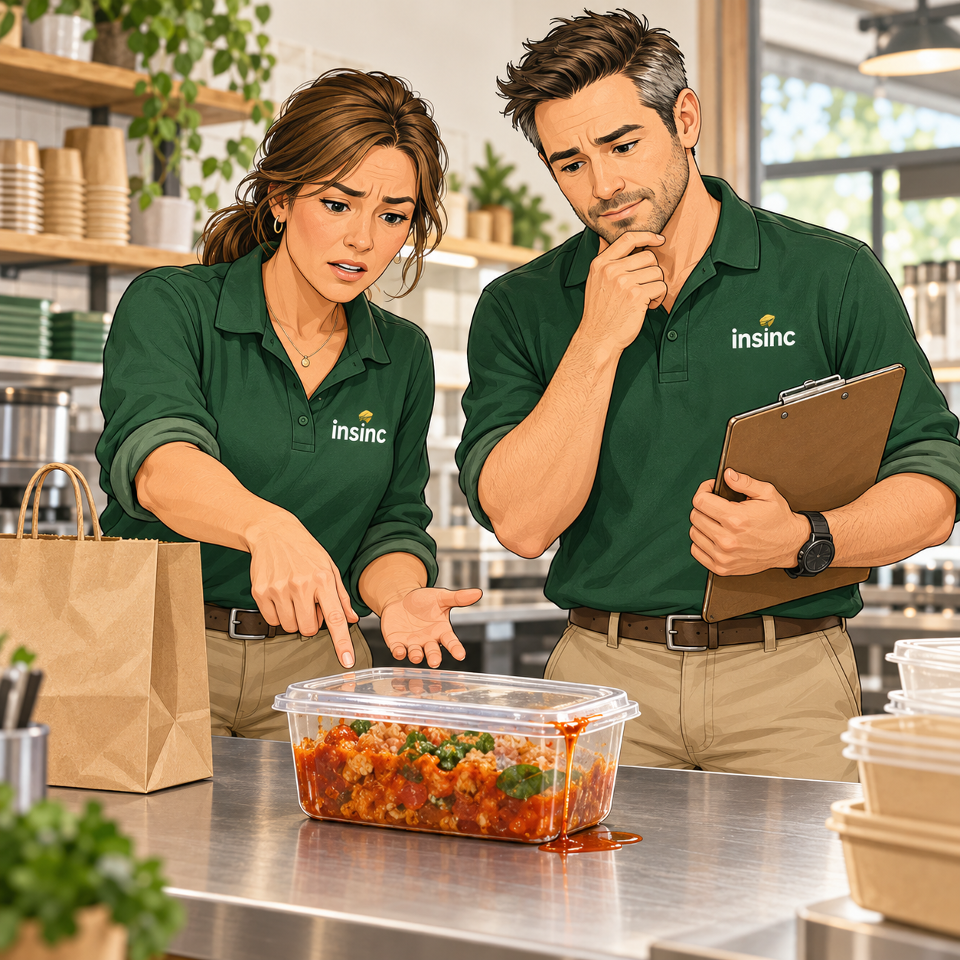
The order looked fine at the counter. By the time it reached the customer, there was sauce in the bag and a lid lifting at one corner. Sound familiar?
For NZ cafés, takeaway shops and caterers, a leaking container means more than a messy bag. It can mean a replacement meal, extra packaging and an unhappy customer. Before switching your entire range, check how the base, lid, food and packing routine work together.
Quick answer: why do takeaway containers leak?
Possible causes include an incompatible lid, an edge that has not closed properly, food caught on the rim, overfilling, damaged packaging or movement during delivery. A container can also be unsuitable for the food or temperature involved. Start with the exact base-and-lid pairing, then check filling, closure and transport conditions.
1. Match the product codes, not just the shape
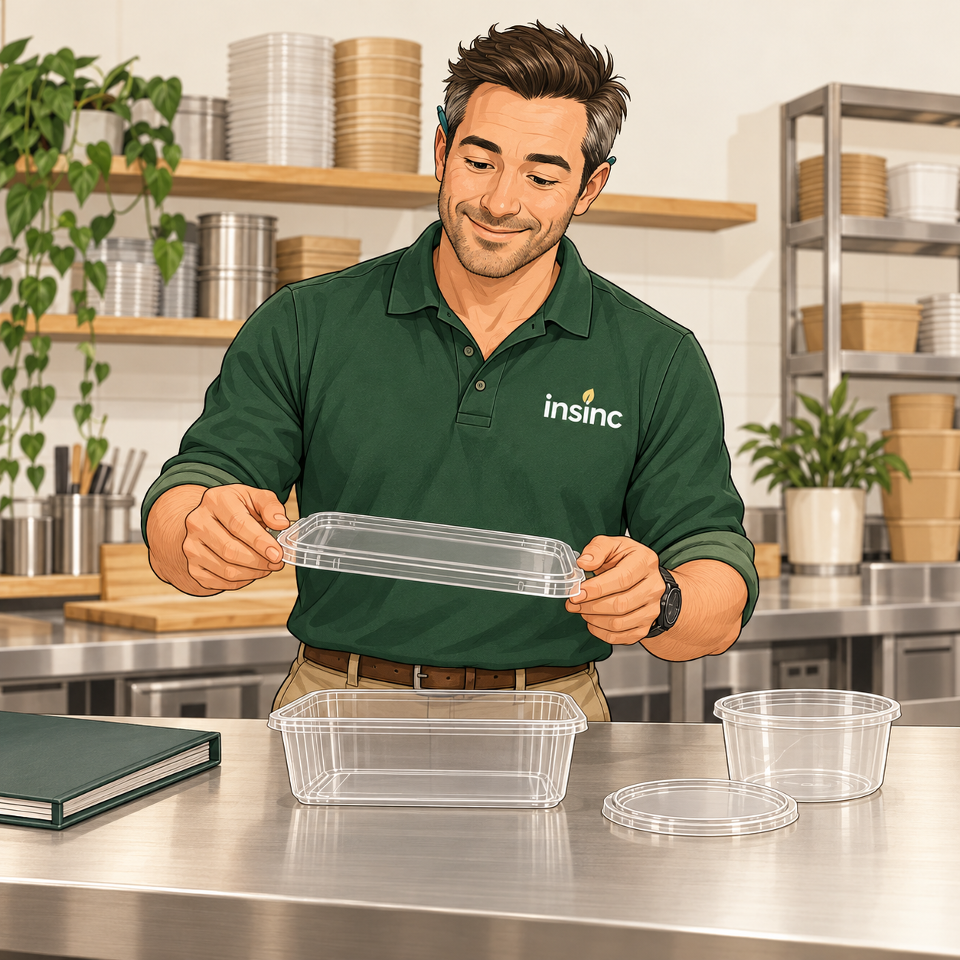
Two containers can look almost identical without accepting the same lid. Capacity describes how much a base holds; it does not identify the rim shape or locking profile.
A lid described as suitable for 750ml containers is not automatically suitable for every 750ml container. Even within one brand, different ranges may use different lids.
- Record the brand, range and product code of the base.
- Check the supplier's matching-lid reference.
- Confirm the lid material suits the intended food and use.
- Check whether lids are included or sold separately.
Male Alex's take: “Start with the container code. A lid that looks close enough is still a guess.”
What to check before ordering another carton
The base
Brand, range, product code, capacity and intended use. Keep a sleeve label or photograph so the team can identify it accurately.
The lid
Matching product code, material and temperature limits. A similar length or diameter alone does not confirm compatibility.
The order quantity
Compare the number of individual bases and lids, not just the number of cartons. Pack quantities can differ.
Keep different lid families in separate, clearly labelled storage positions. When replacing a discontinued range, confirm the new base and lid together rather than assuming leftover lids will fit.
2. Give the food enough room
If the lid presses against the food, closing it can push sauce towards the rim or stop an edge seating properly. Choose capacity around the finished portion, including sauces and toppings.
Headspace is the gap between the food and the lid. There is no single gap that suits every meal and container. Follow the packaging guidance and trial your actual portion so the lid closes without compressing the food.
Also check how capacity is described. A brim-full capacity is the volume up to the top, not a recommendation to fill a takeaway meal to that level.
Female Alex's check: “Can we close this comfortably with the full portion inside?” If the answer is no, review the container size or how the meal is packed.
For meals with separate sauces or dressings, consider a suitable portion container with its own matching lid. It still needs to be tested and packed securely.
3. Check the whole rim
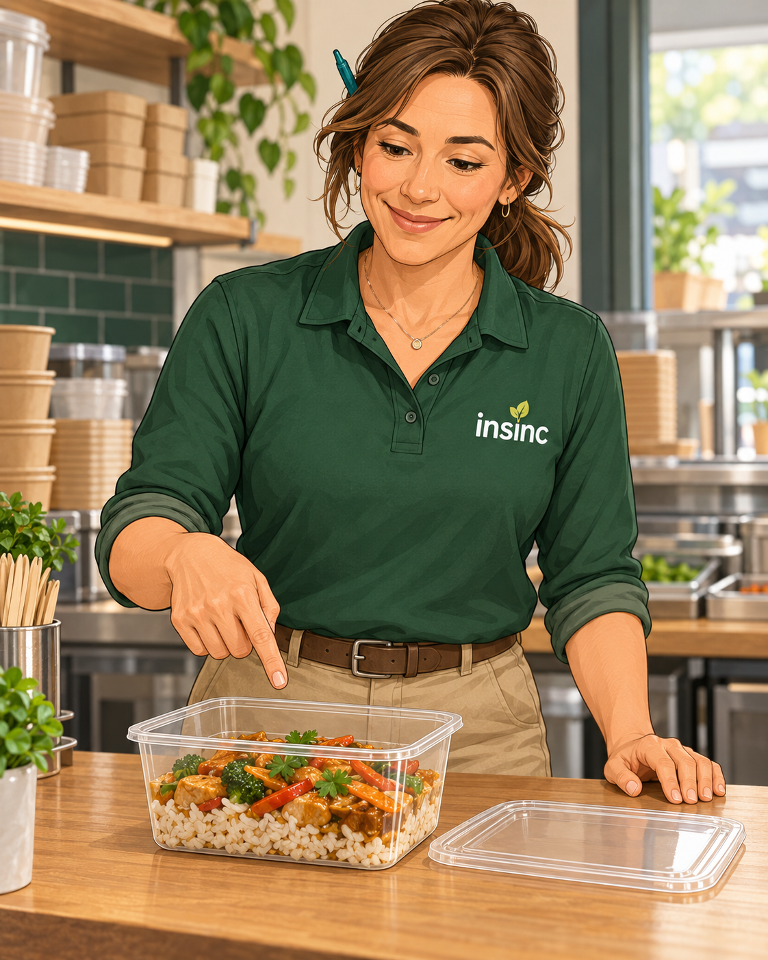
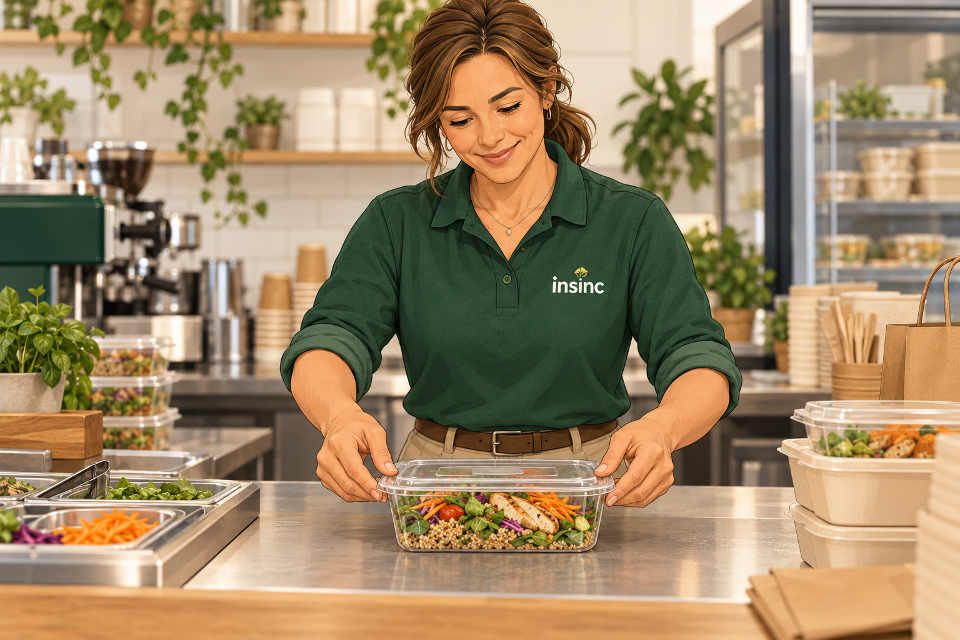
A lid can appear closed from above while one corner remains lifted. Before dispatch, inspect the complete perimeter rather than relying on a single click.
- Check that the base and lid are undamaged.
- Keep food and sauce away from the sealing rim.
- Align the lid and close it using the supplier's method.
- Check each corner and edge for gaps or lifting.
Use hygienic handling and avoid touching food-contact surfaces. If packaging is split, badly bent or cannot close normally, replace it. Forcing a mismatched lid or adding tape does not correct the underlying fit.
4. Check the food and temperature requirements
A lid may physically fit but still be wrong for the application. A cold salad, a hot curry and a meal intended for reheating place different demands on packaging.
Check the base and lid separately for hot-fill, microwave, oven, freezer and storage suitability. Approval for one use does not automatically cover another. For example, a microwave-safe base does not make every matching lid microwave-safe.
Insinc's natural 750ml BioCane base listing specifically notes that matching PET and PLA lids are not microwave- or oven-safe. Use the instructions for the exact components you purchase, rather than transferring claims from one material to another.
If a meal is very liquid, oily or likely to sit in packaging for an extended period, ask for a recommendation for that application. Keep any packaging trial consistent with your food control plan; do not leave food at room temperature simply to solve a lid problem.
5. Test the journey, not just the counter
A container that sits neatly on a bench may behave differently when carried, stacked or placed in a delivery bag. Trial the complete meal and packaging combination before committing to a large order.
- Keep containers upright on a stable base.
- Avoid heavy items pressing on lightweight lids.
- Use a bag or carrier that limits unnecessary movement.
- Check for leaks and lifted edges after a representative journey.
Use your normal portions, appropriate food temperature and realistic delivery duration. Record the base and lid codes alongside the result. Change one factor at a time so you can identify what helped.
The Practicalist take: “Leak-resistant” should not be treated as a promise that a pack can be tipped sideways or carried upside down.
Where Insinc can help: start with a listed matching pair
The following base and lid are linked as associated products on Insinc's site. Confirm suitability for your menu and trial the combination before changing your packing routine.
Natural 750ml BioCane base
BioPak's sugarcane-pulp base, listed with a brim-full capacity of 750ml. The product code is BP B-LB-750-N. Lids are separate.
View the 750ml base →Natural Large BioCane lid
The associated natural lid, product code BP B-LBL-N-PF, is listed for the matching 750ml and 1000ml BioCane bases. This is a range-specific fit.
View the matching lid →Compare other formats
Need a different portion size, shape or lid material? Explore the BioPak range, then confirm the exact base-and-lid pairing for your application.
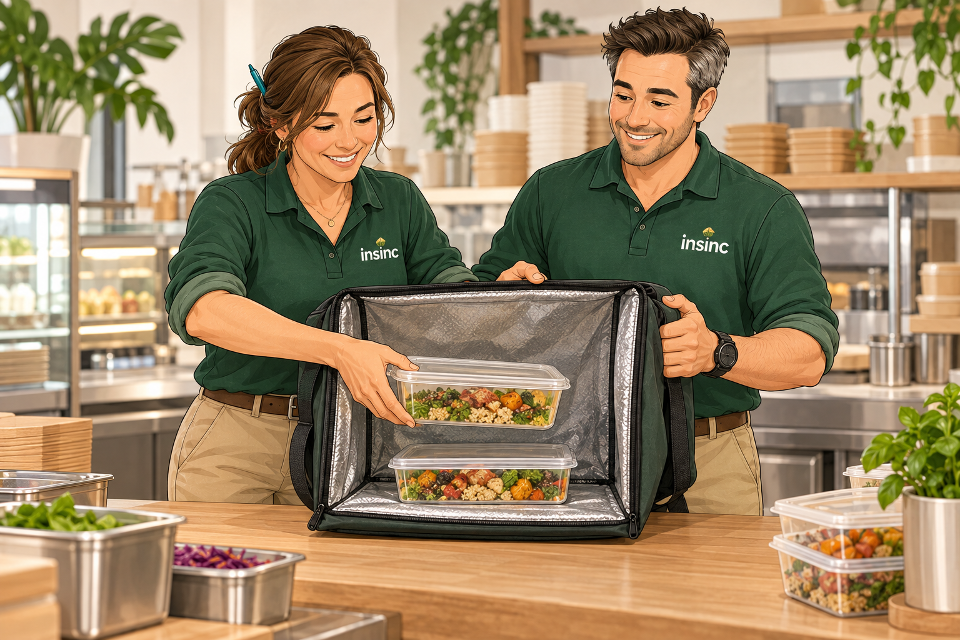
Browse BioPak takeaway packaging →The Alex & Alex illustrations demonstrate general packing checks. They are not photographs of the BioCane products linked above; see the product pages for actual appearance and specifications.
Why choose Insinc?
Insinc supplies food packaging for New Zealand businesses. Share your current container code, lid code, meal type and a photograph of the problem so the team can help you compare suitable options.
Practical Sustainability™ includes choosing packaging that does its job. Preventing avoidable spills can reduce wasted meals and unnecessary replacement packaging. Check disposal guidance for the base and lid separately, including what your local waste service accepts.
Your 60-second Practical Workplace Check-up
- Do the base and lid codes match the supplier's guidance?
- Does the food leave enough room for the lid to close?
- Is the entire rim clean, undamaged and properly closed?
- Are both components suitable for the intended temperature and use?
- Have we tested the pack under normal delivery conditions?
Need help matching your packaging? Call 0508 467 462 or email sales@insinc.co.nz.
Explore takeaway containers and lidsFrequently asked questions
Will any 750ml lid fit a 750ml container?
No. Capacity does not identify the rim dimensions or closing profile. Check the brand, range and matching product codes. Some lids fit several sizes within one range, but that does not make them universal.
Why does a container leak even when the lid clicks?
One section may have engaged while another remains open. Check every edge, along with food on the rim, damage, overfilling and the suitability of the lid itself.
How much space should I leave below the lid?
Enough for the lid to close as intended without pressing on food or pushing sauce towards the rim. Follow the packaging guidance and trial your actual portions; there is no universal headspace measurement.
Can I microwave a container with its lid on?
Only when the instructions for both components allow it, following any venting or removal directions. Do not assume a lid shares the microwave suitability of its base.
Are compostable containers automatically leakproof?
No. Compostability describes an end-of-life property under specified conditions, not a guarantee of sealing performance. Check the product's food-use specifications and test it with your meals.
Should I buy the base and lid from the same brand?
A supplier-confirmed matching pair is the useful starting point. Even within one brand, different ranges can use different lids. Confirm compatibility rather than relying on the brand name alone.